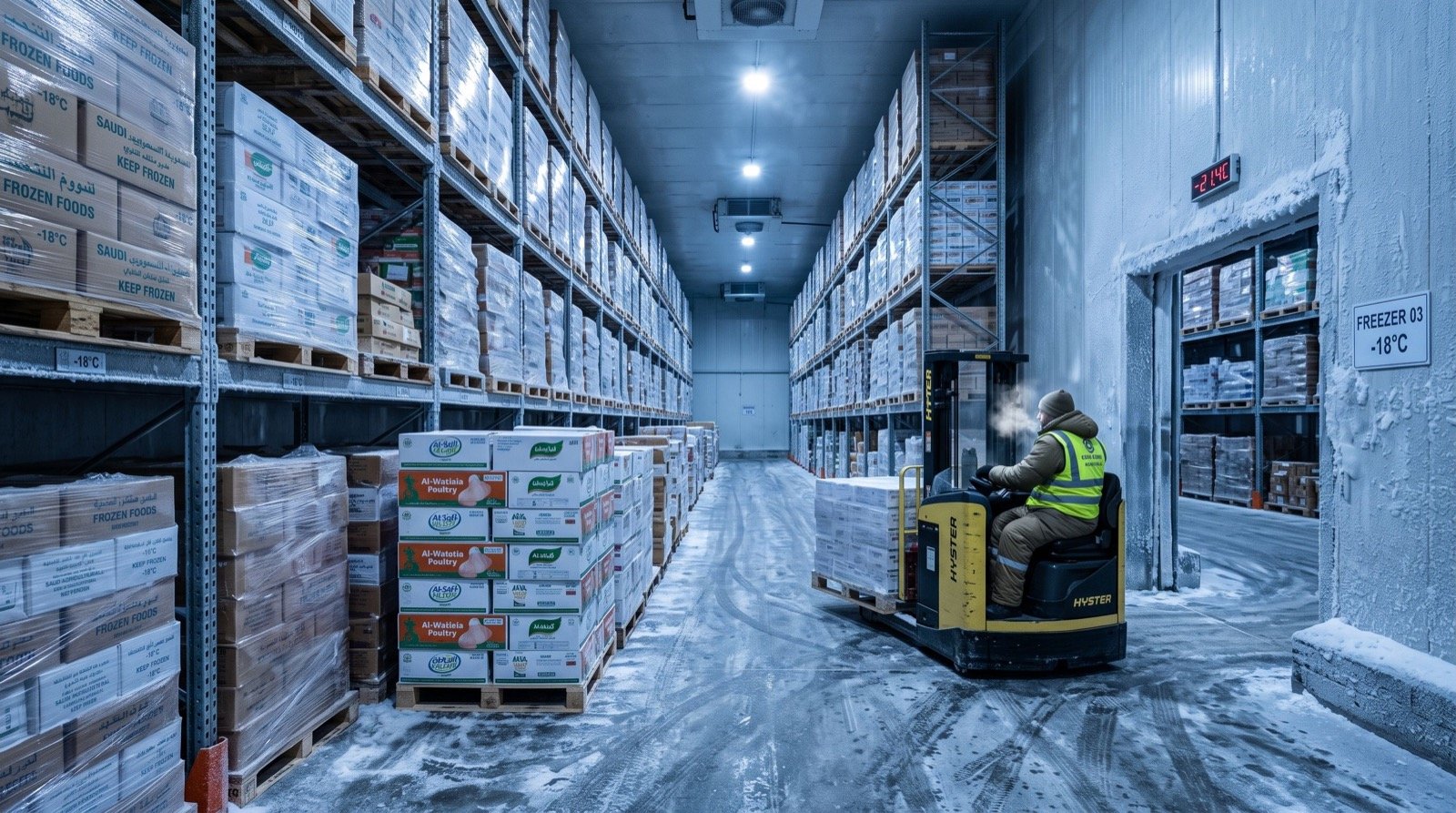
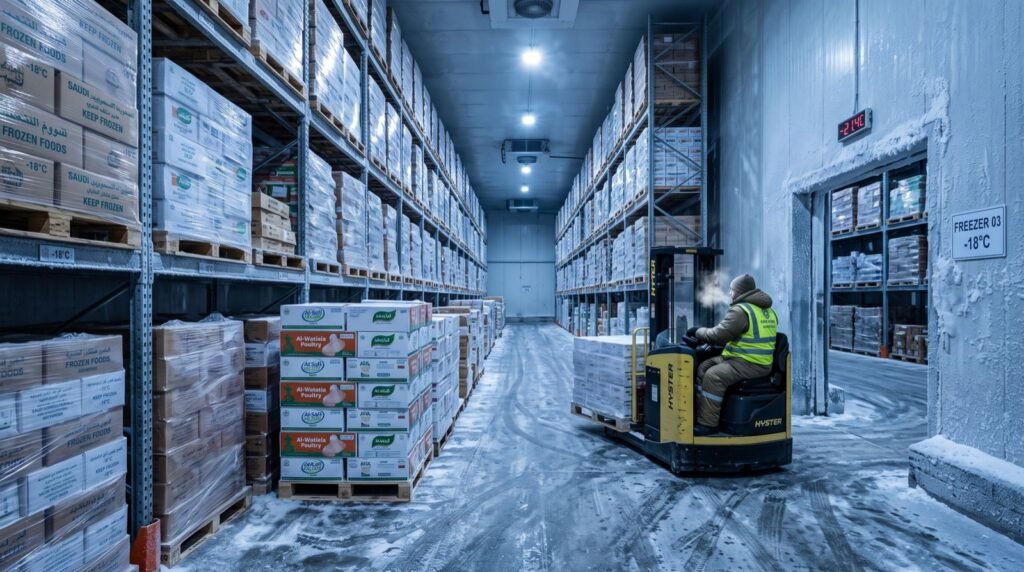
Frozen Storage in Jeddah: What Importers Must Know in 2026
Reliable frozen storage in Jeddah is the backbone of the Red Sea coast’s food trade, and in 2026 the stakes keep rising as import volumes grow. Jeddah Islamic Port handles a huge share of the Kingdom’s seaborne cargo, which means frozen goods often land here first. Get the freezing and handling right, and your product stays safe; get it wrong, and a single thaw can destroy an entire container.
Frozen storage holds products at minus 18 degrees Celsius or colder, locking in quality for months. This deep cold halts microbial activity and preserves texture far longer than chilling. For importers on the coast, the warehouse that receives your container is the first and most important link in that frozen chain.
Why frozen storage in Jeddah carries extra risk
Jeddah’s coastal climate combines high heat with high humidity, a brutal pairing for frozen cargo. When a container door opens on a sweltering dock, moisture condenses and frost forms instantly. Repeated thaw-refreeze cycles create ice crystals that wreck texture and signal, to any inspector, that the cold chain broke somewhere.
Speed and discipline at the dock therefore matter as much as freezer capacity. The best operators pre-stage reefer connections, move pallets into blast-frozen rooms fast, and record temperatures at every transfer. Documentation is not bureaucracy here; it is the proof your buyers and regulators will demand.
Goods that rely on frozen storage
- Imported meat, poultry, and seafood.
- Frozen vegetables, fruit, and bakery dough.
- Ice cream and frozen desserts.
- Ready meals and par-baked products.
- Certain industrial and pharmaceutical materials.
How cold is cold enough?
For most frozen food, minus 18 degrees Celsius is the global benchmark, and many operators run colder to build a safety buffer. International food-safety guidance from bodies such as the World Health Organization stresses that maintaining a continuous cold chain is essential to prevent foodborne illness. You can read the WHO food-safety overview at the World Health Organization.
Colder is not automatically better for every product, though. Over-freezing wastes energy and can harm delicate items. The right target balances safety, quality, and cost, which is why specialist advice beats a one-size-fits-all setpoint.
| Stage | Target handling | Why it matters |
|---|---|---|
| Container arrival | Immediate reefer plug-in | Prevents dock thaw |
| Blast freezing | Rapid pull-down | Limits ice crystal damage |
| Long-term hold | -18 C or colder | Preserves quality for months |
| Outbound load | Pre-cooled truck | Protects the final leg |
Beyond food: specialised cold and controlled storage
Frozen warehousing is not only about meat and seafood. Many high-value, temperature-sensitive goods also need controlled conditions on the coast. Cosmetics are a clear example, since heat degrades active ingredients, separates emulsions, and shortens shelf life. Brands increasingly seek dedicated Storage for Cosmetics products to protect formulation integrity from the moment goods clear customs.
Choosing a provider that handles both frozen food and sensitive consumer goods lets importers consolidate suppliers. One compliant site, one audit trail, and one responsive team reduce complexity across your whole portfolio.
Insurance and liability deserve a close look too. Confirm who carries responsibility if a freezer fails and stock is lost, and check that the policy actually covers the full value of your cargo. The strongest operators are transparent about cover limits and claims procedures, which tells you they expect to be held to a high standard.
A practical tip for importers
Request the warehouse’s temperature log for the specific bay where your pallets will sit, covering the last peak summer week. Averages hide problems. A real weekly chart shows how the room behaves under maximum strain, and it quickly separates confident operators from those making promises they cannot keep.
Choosing a frozen storage partner on the coast
Capacity, compliance, and culture decide the outcome. Confirm that your candidate for Frozen Storage in Jeddah offers blast freezing, continuous monitoring, and genuine power redundancy, not just a big freezer. Ask how fast an alarm reaches a human and what happens next.
Local knowledge is a quiet advantage. Port procedures, customs timing, and summer logistics all reward familiarity. An experienced local team will anticipate bottlenecks at the port and keep your cold chain intact when conditions turn difficult.
Common cold-chain mistakes importers make
Experience on the coast reveals the same avoidable errors again and again. The most expensive is treating the warehouse as the only risk point. In reality, the gaps between links, at the port, on the truck, and on the dock, cause most losses. Mapping the full journey exposes these blind spots.
A second mistake is choosing a provider on price alone. A cheaper rate that comes with weak redundancy or slow alarm response can cost far more when a single container thaws. Total landed cost, including spoilage risk, is the figure that matters.
Third, many importers neglect documentation until a buyer demands it. Without continuous temperature records, you cannot prove your goods stayed safe, and some markets will reject undocumented cargo outright.
These five habits separate resilient importers from the rest:
- Audit the entire chain, not just the freezer room.
- Insist on real redundancy and regularly tested generators.
- Keep continuous, exportable temperature logs.
- Pre-cool trucks before every outbound load.
- Review performance data after each peak season.
Freshness is also a brand promise. When a restaurant or retailer receives seafood in flawless condition, they reorder with confidence. When they receive a thawed, refrozen block, they remember, and they switch suppliers. Protecting the cold chain is therefore a commercial strategy, not merely a technical task.
Finally, build relationships before you need them. The time to learn how a warehouse handles a crisis is not during one. Visit the site, meet the night team, and understand the escalation path long before a summer heatwave tests the system.
Frequently Asked Questions
What temperature is standard for frozen storage?
Minus 18 degrees Celsius is the widely accepted benchmark for frozen food. Many facilities run slightly colder to create a safety margin against brief fluctuations during handling and transport.
Why is Jeddah so important for frozen imports?
Jeddah Islamic Port is one of the Kingdom’s main seaports, so a large volume of imported frozen cargo arrives there first. Fast, disciplined handling at the coast protects products before they move inland.
What is blast freezing and do I need it?
Blast freezing pulls product temperature down rapidly, forming smaller ice crystals that preserve texture. If you import fresh or partially frozen goods, a facility with blast capacity protects quality far better than slow freezing.
Can one warehouse store food and cosmetics?
Yes, provided it offers separate, correctly controlled zones. Consolidating with one compliant operator simplifies audits and reduces the number of deliveries and handoffs you must manage.
Conclusion
Dependable frozen storage in Jeddah protects your cargo from the moment a container lands until the final truck pulls away. Prioritise rapid dock handling, blast-freezing capacity, verified power redundancy, and a local team that knows the port. Review real temperature logs, plan for 2026 import peaks, and consolidate sensitive goods with a single trusted operator. Ready to safeguard your frozen supply chain on the Red Sea coast? Speak with a specialist team today.